

Simple Skincare for Long-Term Travel: A Practical Guide
Table of Contents
- Why Simple Skincare for Long-Term Travel Matters
- Build a Minimalist Travel Skincare Routine
- Assemble Your Long-Term Travel Skincare Kit
- How to Keep Skin Hydrated While Traveling
- Skincare for Long-Haul Flights: Before, During, and After
- Adapt Your Routine for Changing Climates and Water
- Product Storage and Hygiene on the Road
- Frequently Asked Questions
Last Updated: October 12, 2026
Why Simple Skincare for Long-Term Travel Matters
Traveling for weeks or months changes how your skin behaves. Cabin air dries it out, different water quality disrupts your barrier, and climate shifts happen faster than your skin can adapt.
The solution isn't more products. It's building a skincare for long-term travel routine so simple and portable you can actually stick to it.
This guide walks you through building a minimalist travel skincare kit that handles real conditions: cleansing without stripping, hydrating through dry cabin air, protecting against sun damage, and adapting when everything changes.
Build a Minimalist Travel Skincare Routine
The best travel skincare routine is one you'll actually use: it fits in your carry-on, works in different climates, and delivers results even when you're exhausted. Start with this framework: cleanse, hydrate, protect. Those three steps handle 90% of what your skin needs.
Step 1: Cleanse Without Stripping Your Skin
Cleansing is non-negotiable: it removes dirt, sweat, sunscreen, and breakout-causing buildup. But harsh cleansers damage your skin barrier, especially when travel already has you stressed.
Use a gentle cleansing bar or mild liquid cleanser; a solid bar takes almost no space and lasts longer.
The key is using water you trust. If you're concerned about local water quality, bring bottled water for your final rinse. This prevents bacteria and minerals from settling on your skin.
Cleanse twice daily: morning to remove overnight buildup, night to clear dirt and sunscreen. On exhausting travel days, cleansing is the one step you cannot skip.
Step 2: Hydrate and Protect Your Barrier
After cleansing, your skin is slightly dehydrated. A good moisturizer locks in water and strengthens your skin barrier, the layer that keeps moisture in and irritants out.
For travel, a multipurpose balm beats a light lotion: concentrated, so a small tin lasts weeks, and it absorbs without excessive oily residue.

Apply moisturizer to damp skin immediately after cleansing to help absorption. Use about a pea-sized amount for your face; a little goes a long way.
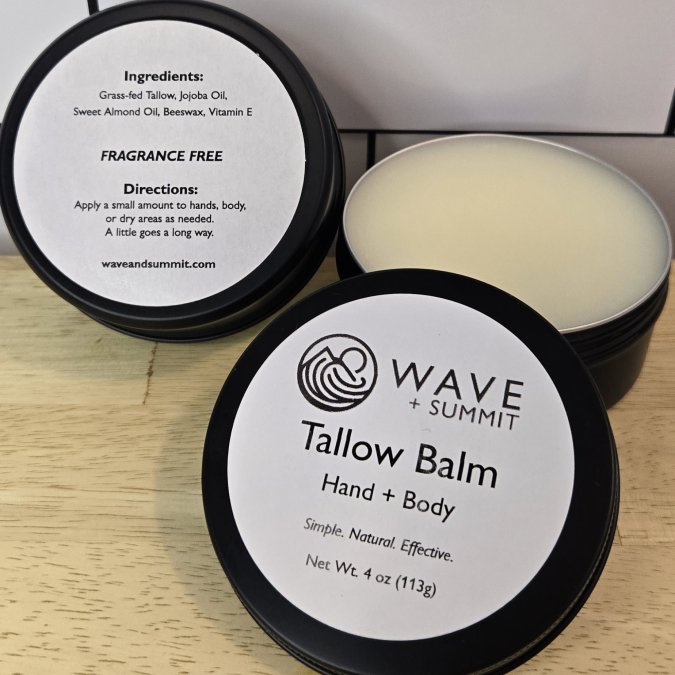
The WAVE + SUMMIT Hand + Body Balm in Fragrance Free works for face and body, which simplifies your kit. One product handles multiple needs.
Step 3: Apply Daily Sun Protection
Sun damage accumulates fast when you're traveling: you're outdoors more, often in climates where the UV index is stronger than you expect. Sunscreen is the most important anti-aging product you own.
Use a mineral sunscreen with at least SPF 30. Mineral formulas sit on top of skin and reflect UV rays, so they're less likely to irritate sensitive skin or clog pores.
On travel days between locations, sunscreen matters even more: you might spend hours in transit without realizing your sun exposure. A solid sunscreen stick is easier to pack and reapply than liquid.
Assemble Your Long-Term Travel Skincare Kit
Your complete skincare for long-term travel kit should fit in a small pouch. Here's what to pack:
Core products:
- One gentle cleanser (solid bar preferred)
- One multipurpose moisturizing balm
- One sunscreen (SPF 30 or higher)
- One hydrating face spray or mist
Optional add-ons (only if you have space):
- A hydrating mask for intensive moisture nights
- A lip balm with SPF
- A small container of body oil for extra dry areas
The WAVE + SUMMIT Hand + Body Balm (4 oz) is designed for exactly this purpose. One tin fits easily in a carry-on and handles face, hands, body, and lips. The tin is reusable and recyclable, so you're not creating waste as you travel.
Keep your skincare pouch accessible in your carry-on, not in checked luggage. You'll need it during flights and at your first destination.
How to Keep Skin Hydrated While Traveling
Airplane cabin air is extremely dry: humidity drops to 10-20%, versus 30-65% indoors. Your skin loses moisture fast, and the effect compounds over long flights.
Start hydrating before you board. Drink water consistently for the 24 hours before your flight. Moisturize your face and hands that morning.
During the flight, drink water every hour, avoid alcohol and caffeine, and apply a hydrating face spray or mist every two hours.
After you land, hydrate aggressively for 24 hours: moisturize twice daily, use a hydrating mask if you have one, and drink more water than you think you need.
Skincare for Long-Haul Flights: Before, During, and After
Long-haul flights stack stressors: cabin humidity near 10-20%, low air pressure, recycled air, and hours of UVA exposure through the window at altitude. The goal isn't a special flight routine, but protecting the barrier you already have so you don't land with a compromised one.
Before the flight (24 hours out)
- Hydrate steadily the day before. Aim for pale-yellow urine as a rough gauge, not a fixed number of ounces, since body size and activity vary.
- Cleanse gently the night before. Skip exfoliating acids and retinoids for 24-48 hours before a long flight. Your barrier is about to be stressed; don't pre-strip it.
- Moisturize that morning and again before boarding. A balm or occlusive layer slows water loss better than a light lotion.
- Apply mineral SPF 30+ to face, ears, and the back of your hands. Window glass blocks most UVB but transmits a meaningful share of UVA, so altitude exposure is real even when you're seated (The Risk of Melanoma in Pilots and Cabin Crew: UV Measurements in Flying Airplanes).
During the flight
- Mist, then seal. A hydrating mist alone evaporates and can pull moisture from your skin in dry cabin air. Follow every mist with a thin layer of balm to lock it in.
- Reapply balm to face, hands, cuticles, and lips roughly every 3-4 hours, or whenever skin feels tight.
- Skip alcohol and limit caffeine. Both are diuretics, and cabin air is already dehydrating you.
- Drink water on a schedule tied to the flight length, not to thirst. A common pattern is one cup per hour of airtime.
- Leave makeup off, or remove it within the first couple of hours. Occlusive foundation over dry, pressurized skin tends to look worse by landing, not better.
After you land
- Cleanse with lukewarm water to remove travel grime and any residual SPF. Hot water strips lipids you just spent the flight protecting.
- Apply moisturizer to damp skin within a minute or two of patting dry. This is when it absorbs best and traps the most water.
- Give your skin 48 hours before reintroducing actives. If you use retinoids or exfoliants, restart at half your usual frequency for the first few nights.
- Expect a dull, tight feeling for a day or two. That's normal barrier stress, not a reason to add products. Hydration and sleep resolve most of it.
Adapt Your Routine for Changing Climates and Water
In dry climates, increase your moisturizer use. Your skin barrier is working harder in low-humidity environments.
In humid climates, you might need less moisturizer on your face, but don't skip it entirely. Humidity doesn't mean your skin is hydrated.
Water quality varies dramatically by location, and hard, mineral-rich, or chlorinated water can irritate skin.
If you're traveling for months, expect your skin to shift: what worked in week one may need adjustment by week six.
Product Storage and Hygiene on the Road
On a two-week trip, storage is minor. On a two-month trip, it's the difference between a kit that works and one that's contaminated, melted, or expired by week six. Most travel skincare guides skip this part.
Decanting without wrecking your products
- Decant only what you'll use in 4-6 weeks. Smaller containers mean less air exposure and less chance of contamination.
- Use squeeze tubes or pump bottles over open-mouth jars for anything water-based. Every time you dip a finger into a jar, you introduce whatever was on your hands.
- Label everything with the product name and the date you filled it. Sharpie on masking tape works and survives most bags.
- Leave headspace in the container. Liquids expand with heat and altitude, and a full tube will leak in your bag.
- Never top off a partially used container with fresh product. You're mixing old bacteria with new formula.
Heat, light, and stability
- Balms and oil-based products are more heat-stable than lotions and serums, which is one reason a solid balm travels well. But even balms soften and can separate in a hot car or a checked bag sitting on a tarmac.
- Keep your kit in your carry-on, not checked luggage. Cargo holds get hot, and you lose access to products you need mid-flight.
- Store the pouch in the coolest spot available: a shaded hotel drawer, not a sunny windowsill or a car glovebox.
- If a product separates, changes color, or smells different, treat it as compromised and replace it. Don't try to remix it.
Expiration and the multi-month problem
- Most opened skincare has a period-after-opening (PAO) window, often 6-12 months for water-based products and longer for anhydrous balms and oils. Check the small open-jar symbol on the label.
- Sunscreen is the exception. Its SPF degrades over time and faster with heat exposure. If your sunscreen has been in a hot car or direct sun for hours, replace it rather than trusting the label date.
- Water-based products (cleansers, serums, mists) are the most vulnerable to microbial growth. If you're traveling somewhere hot and humid, plan to replace these sooner than you would at home.
- Anhydrous products (balms, oils, solid bars) are the most travel-durable. This is the practical argument for building a kit around them on long trips.
Replenishment and budgeting on the road
- Before you leave, note the exact product names and sizes you rely on; a photo of the label beats describing a product in a store where you don't speak the language.
- Estimate your daily use rate.
- Build a small buffer. Carry one backup of your most-used product rather than relying on finding it abroad.
- If you can't source your exact product, look for a functional match, not a brand match: a gentle non-foaming cleanser, a fragrance-free occlusive balm, and a mineral SPF 30+. Those three categories exist almost everywhere.
- Pharmacies and grocery stores are usually more reliable than specialty beauty shops for basic cleansers and sunscreen. Hotel front desks can often receive a shipped package if you order ahead.
Frequently Asked Questions
What is the best skincare routine for long-term travel?
A three-step routine works best: cleanse with a gentle bar or minimal-water cleanser, apply a hydrating balm that supports your skin barrier, and use daily sunscreen. This approach minimizes packing weight while addressing the three core concerns, cleanliness, hydration, and sun protection, that matter most across varying climates and long travel days. Stick to products that multitask: a tallow balm like Wave + Summit's Hand + Body Balm can replace separate face moisturizer, lip balm, and hand cream.
How can I keep my skin hydrated while traveling?
Hydration comes from both products and habits. Apply a barrier-supporting balm immediately after cleansing while skin is still slightly damp to lock in moisture. Drink more water than you think you need, especially on flights and in dry climates. Use a face spray or hydrating toner between cleanses if your skin feels tight. In airplane cabins, apply balm to your face and lips every few hours. A tallow-based product works well because it mimics skin's natural oils without feeling greasy.
What skincare products should I pack for a long trip?
Pack a cleansing bar or solid cleanser, a multipurpose balm for face and body, sunscreen, and optionally a hydrating mask for intensive moisture nights. Choose solid or concentrated products to save space: a 4 oz tin of balm lasts weeks and replaces multiple jars. Keep everything in carry-on-friendly sizes. Wave + Summit's Fragrance Free or Sandy Footprints balm at 4 oz fits easily in any bag and works for hands, face, elbows, and lips, reducing the number of products you need.
How should I care for my skin on long-haul flights?
Before boarding, cleanse and apply a hydrating balm. During the flight, apply balm to your face and lips every 2-3 hours since airplane cabin air is extremely dry and low humidity strips moisture fast. Drink water regularly and avoid alcohol and caffeine, which dehydrate further. After landing, cleanse gently, reapply balm, and give your skin a day to adjust before introducing new products. If your skin feels particularly tight, use a hydrating mask that evening to restore the skin barrier.