

Does Grass-Fed Tallow Clog Pores? A Guide
Table of Contents
- What Is Grass-Fed Tallow and How Does It Affect Your Skin?
- Understanding the Comedogenic Rating of Beef Tallow
- Why Tallow Might Clog Pores: Purity and Rendering Matter
- Signs of Clogged Pores from Skincare Products
- How to Use Tallow Balm for Acne-Prone Skin
- Grass-Fed Tallow vs. Conventional Tallow: Does It Matter?
- Frequently Asked Questions
Last Updated: September 30, 2026
What Is Grass-Fed Tallow and How Does It Affect Your Skin?
Grass-fed tallow is rendered beef fat from cattle raised on pasture. It's been used in skincare for centuries because it closely mimics your skin's natural oils. The question of whether grass-fed tallow clog pores matters more than most people realize, since the fatty acid profile differs significantly from grain-fed alternatives.
The Fatty Acid Profile of Grass-Fed Tallow
Grass-fed tallow contains oleic acid, linoleic acid, and stearic acid, fatty acids that soften skin and create a protective barrier. Grass-fed beef has a higher proportion of linoleic acid than grain-fed beef, which means better barrier support without excessive occlusion. The animal's diet directly affects whether the tallow will clog your pores or nourish them.
Tallow as an Emollient and Occlusive
Tallow works as both an emollient (filling gaps between skin cells) and an occlusive (sealing moisture in). This dual action makes it effective for dry, wind-chapped skin. However, oiliness doesn't equal clogging, the difference comes down to particle size, purity, and rendering quality.
Understanding the Comedogenic Rating of Beef Tallow
Beef tallow typically ranks 2-3 on the comedogenic scale (0-5, with 5 being highly comedogenic). This moderate rating reflects the fatty acids that make up the tallow and how they interact with your skin barrier.
The Fatty Acid Mechanism Behind the Comedogenic Rating
Tallow's comedogenic rating exists because of its oleic acid and linoleic acid content. These two fatty acids behave very differently on your skin:
Oleic acid penetrates deeply and seals the skin surface, potentially trapping bacteria and sebum if the pore isn't clean, raising comedogenic risk. Linoleic acid remains on the surface, strengthens barrier function, and reduces inflammation, lowering comedogenic risk.
Grass-fed tallow contains 15-20% linoleic acid versus 10-15% in grain-fed tallow, making it less likely to cause congestion in acne-prone skin.
What a 2-3 Rating Actually Means in Practice
A 2-3 rating reflects risk probability, not certainty. Your skin chemistry, pore size, sebum production, and barrier function determine whether you'll experience congestion. Oily, acne-prone skin may see congestion; dry, sensitive skin may see barrier improvement without any.
Why Grass-Fed Tallow Rates Lower Than Grain-Fed
Grass-fed cattle consume grass and clover (rich in linoleic acid precursors), while grain-fed cattle consume corn and soy (higher in oleic acid). Proper rendering preserves the favorable linoleic acid ratio in grass-fed tallow. High-quality rendering removes impurities and oxidized fats; low-quality rendering leaves particles that trigger congestion.
Why Tallow Might Clog Pores: Purity and Rendering Matter
The biggest reason some people experience pore congestion from tallow is how it was processed, not the tallow itself.
Low-Quality Rendering and Impurities
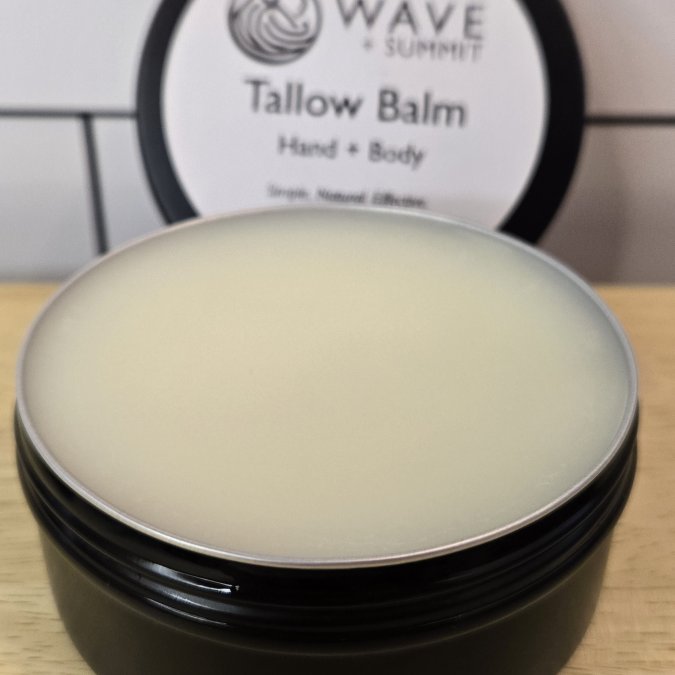
Poor rendering leaves behind protein fragments, collagen particles, cellular debris, and impurities, larger particles that block pores and accumulate on skin. High-quality rendering uses low heat and multiple filtration steps to produce clean, pure fat that absorbs effectively.
Pore Congestion vs. True Allergic Reaction
Pore congestion is physical blockage (whiteheads, blackheads, small bumps). An allergic reaction involves inflammation, redness, itching, or burning. Many confuse the two, but the fix differs: congestion requires switching to better-rendered tallow or reducing amount; allergic reaction requires discontinuing the product.
Signs of Clogged Pores from Skincare Products
Clogged pores appear within 3-7 days as small, firm bumps in predictable zones where you applied the most product. Congestion resolves quickly, bumps fade within 3-5 days of stopping use, distinguishing it from immune or inflammatory responses.
How Impurities Accumulate in the Pore Canal
When poorly rendered tallow is applied to skin, impurities, protein fragments, collagen particles, and cellular debris, sit on the skin surface and in the pore opening. These particles are larger than pure fat molecules. Over time, they mix with sebum and dead skin cells already present in the pore, creating a plug that blocks the pore opening.
This is different from an allergic reaction, which involves immune activation and inflammation throughout the area where the product was applied. Congestion is mechanical, it's a physical blockage, not an inflammatory event.
Allergic Reaction vs. Congestion: The Key Differences
Allergic reactions appear within 24 hours with inflammation, redness, itching, or burning that spreads beyond application areas. Congestion is localized, painless, and resolves quickly once the product is removed. Congestion requires switching to better-rendered tallow or reducing amount; allergic reaction requires discontinuing the product.
Purging vs. Breaking Out: Know the Difference
This distinction is where most skincare guides fall short. When you introduce a new skincare product, your skin might temporarily worsen. This is called purging, and it's fundamentally different from breaking out.
Purging happens when a product speeds up cell turnover or increases sebum flow temporarily. Your skin sheds dead cells faster, and this can push out congestion that was already forming beneath the surface. Purging usually lasts 2-4 weeks and appears in areas where you're already prone to breakouts. The bumps are typically small, concentrated in your usual problem zones, and improve after the initial 2-4 week adjustment period.
Breaking out is an allergic or sensitivity response. It appears suddenly, often in areas where you never break out. It doesn't improve after the first week; it gets worse or stays the same. Breaking out involves inflammation, redness, and sometimes itching or burning.
With tallow, if you see small bumps in your usual breakout zones within the first week, and they begin to clear by week three, you're likely purging. If you see new bumps in areas where you never break out, or if the bumps feel inflamed and itchy after two weeks, you're probably breaking out and should discontinue the product.
The distinction matters because purging is temporary and often a sign the product is working, your skin is accelerating its natural renewal cycle.
How to Use Tallow Balm for Acne-Prone Skin
If you have acne-prone skin, using tallow requires a careful approach. The goal is to get the benefits, barrier support and hydration, without triggering congestion.
Step 1: Patch Test Before Full Application
Start with a small amount on a discreet area. The inside of your arm or behind your ear works well. Apply a pea-sized amount and leave it for 24 hours.
Step 2: Start with Minimal Application
Use a rice-grain sized amount for your entire face. This sounds tiny, but tallow spreads easily. More product doesn't mean better results, it means higher risk of congestion.
Step 3: Monitor Your Skin Barrier Response
Your skin barrier is the outermost layer of skin cells. Tallow strengthens it by sealing in moisture. But if you use too much, you're sealing in bacteria and sweat too.
- Reduced dryness and flaking
- Less redness and irritation
- Smoother texture
- Stable moisture levels
Step 4: Adjust Based on Skin Type and Climate
Your skin changes with the seasons. In winter, you might need more tallow. In summer, you might need less or none at all.
Grass-Fed Tallow vs. Conventional Tallow: Does It Matter?
Grass-fed tallow has a different fatty acid composition than grain-fed tallow. Grass-fed contains more linoleic acid, which supports the skin barrier without excessive occlusion. Grain-fed tallow has more oleic acid, which penetrates deeper but can feel heavier on acne-prone skin.
Frequently Asked Questions
Is grass-fed tallow non-comedogenic?
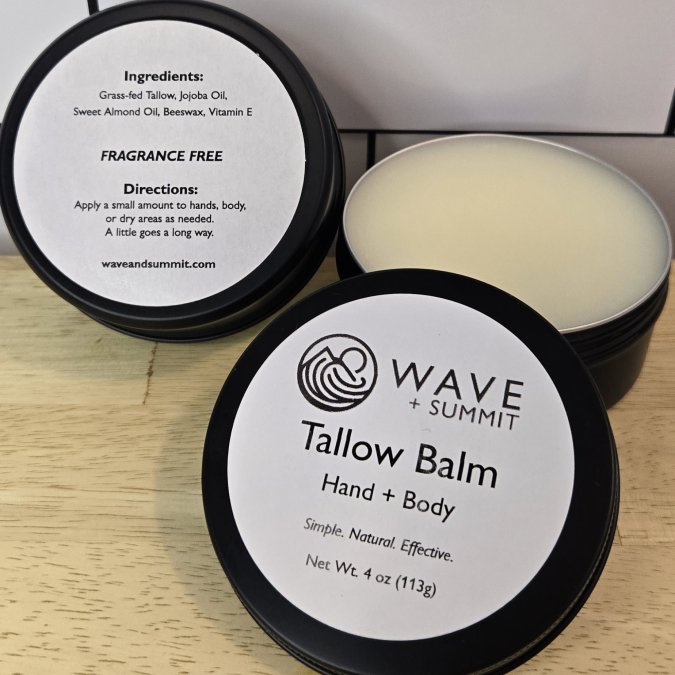
Grass-fed tallow typically rates between 2-3 on the comedogenic scale, meaning it has low to moderate pore-clogging potential when properly rendered and pure. However, purity matters significantly. High-quality, well-rendered grass-fed tallow from reputable sources like Wave + Summit minimizes impurities that cause pore congestion. Individual skin responses vary based on your skin type, existing acne-prone conditions, and how you apply the product. Patch testing before full facial use is essential.
What are the signs of clogged pores from skincare products?
Clogged pores typically appear as small bumps, blackheads, or whiteheads concentrated in areas where you applied the product. You may notice increased oiliness, a rough texture, or mild redness. The key distinction: true pore congestion develops gradually over days, while purging (a natural detoxification response) causes temporary breakouts that improve within 1-2 weeks. If congestion persists beyond two weeks or worsens, discontinue use and consider a lighter application method.
Can I use tallow balm every day if I have acne-prone skin?
Yes, but start conservatively. Begin with application 2-3 times per week on small areas like hands and elbows before moving to facial use. Once your skin adapts without congestion, daily use is possible for most people. Acne-prone skin often benefits from tallow's barrier-supporting properties, which reduce inflammatory responses. However, if you experience persistent pore congestion after a two-week trial period, reduce frequency or discontinue facial application and consult a dermatologist.
How do I know if tallow is causing breakouts or if my skin is purging?
Purging is a temporary adjustment phase where your skin sheds dead cells faster, lasting 1-2 weeks. Breakouts appear in areas where you typically experience acne and gradually improve. True pore clogging from tallow persists or worsens beyond two weeks, appears in new areas, and feels heavy or congested. Purging is accompanied by improved skin texture afterward; clogging leaves no improvement. If unsure, reduce application amount or frequency for one week. If breakouts improve, continue. If they worsen, discontinue and switch to a lighter moisturizer.